One Last Music Culture
The World of Chinese Opera
For my final big blog, I decided to dive into the history of Chinese Opera. Prior to any research, I had no knowledge of the topic, and learned a great deal about the start of Chinese opera, as well as what it has become now. I hope through this blog, you are able to learn more about the wonders of Chinese opera.
Where it Began
The history dates all the way back to A.D. 220-265, which was the period of the three kingdoms. Under the rule of Emperor Li Longji, during the Tang Dynasty (A.D. 712-756), Chinese opera was “formalized”. He was the founder of the first known opera troupe called the Pear Garden. “... today's opera professionals are still referred to as "Disciples of the Pear Garden". (link)
There are several different forms of Chinese opera, stemming from various different regions and time periods in China. These different forms give inspiration and tradition to modern professionals. For starters, there is the Nanxi form which comes from southern China. . This form is sung or has a spoken dialogue that includes rhymes. Another form is Yuan Zaju, it differs because it is split into three main roles that sing, while the previous has only one. Along with these, there are several other forms that my sources covered that range from the 12th to 18th century.
The most recent form, Beijing Opera, was born during the late 18th century. However, due to the cultural revolution in China at the time, it was banned. Never to be performed again until 1978.
“The famous Eight Model Plays — which depicted Communist activities during the war with Japan and the civil war with the Nationalists, as well as the class struggles that followed the founding of the People's Republic of China — were developed during this time.”
Unfortunately, youtube had little to no coverage of these older forms of Chinese opera.
The instruments
There are several types of traditional instruments you’ll see within the opera, even in today's modern operas these instruments will usually be the accompaniment of the performers. I will just be going over a few of the most common instruments.
Gaohu
Bowed instrument
High pitched

Erhu
Two-stringed fiddle
Long-necked & snakeskin box
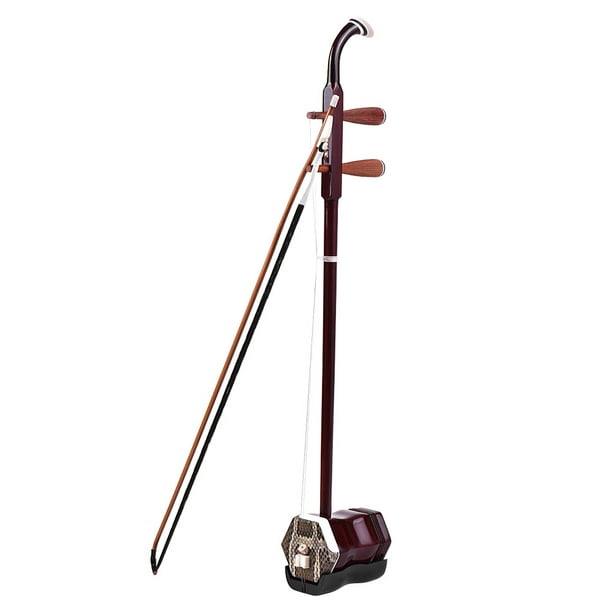
Pipa
Pear shaped
4 strings & 32 frets
One of the oldest instruments

Suona
Resembles an oboe
Double reed

Dizi
Bamboo flute
Bright sound
6 or more finger holes

These are just a small selection of the various instruments you would find in a Chinese opera. There are far more such as the Bo, Yangqin, etc.
The roles
The roles and characters of the opera can vary based on the form and region of origin. Making it somewhat hard to narrow down the overarching theme. Although, we can categorize four main roles.
1. Chou This role is more of a broad term and can be further divided into the male (Nan Chou) and female (Nu Chou) roles. It is also referred to as the clown role. “Clowns normally improvise and often make reference to local current events.”2. Sheng
Xiao Sheng Young man role
Lao Sheng Old man role
Wu Sheng Warrior man
Hua Dan Young woman role
Lao Dan Old woman role
Wu Dan Warrior Woman
Qing Yi Graceful young maiden
Guimen Dan High-born woman
Both the Sheng and Dan categories both have different variations based on region/style.
4. Jing Roles that involve heavily painted faces, this is usually a male role. However, not all people with painted faces fall into this category.
All of these roles contain subtypes for their subtypes, so it really depends on location and a few other factors.
Modern Chinese Opera
Beijing (Perking) Opera is the most popular form today, along with a few other forms
that were also revived. Since 1976, there have been traditional opera
performances, although a few have been censored and criticized. There
are more than 30 forms being performed throughout the country.
The makeup used in these operas has a deeper meaning than just vibrant colors.
Red = brave and loyal
Black = bold and impartiality
Yellow = ambition
Pink = cool-headedness and sophistication
Blue = fierce and far-seeing
Green = Wild and Impulsive
White = treacherous and cunning (villians)
Little makeup in the center of the face (xiaohualian) = clown role
The plots of these plays can range tremendously from twisted plots
to folk tales, again depending on the style.
Comments
Post a Comment